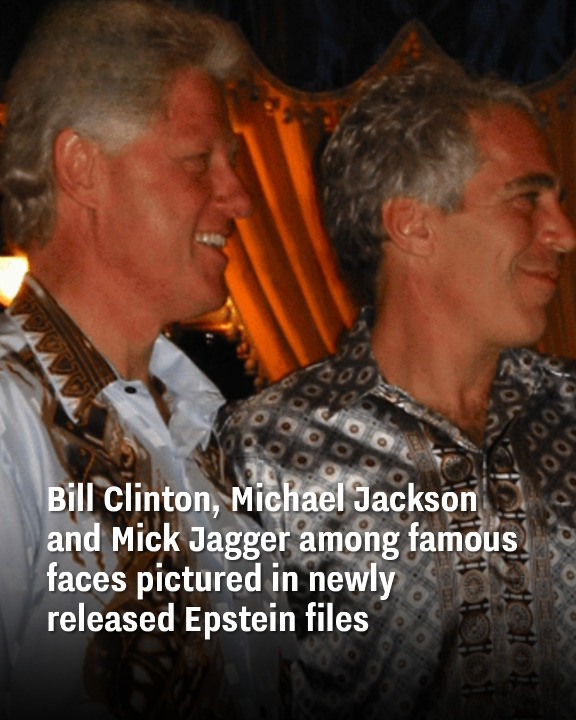
The legal and cultural aftershocks of the Jeffrey Epstein case continue to reverberate as a massive new trove of documents and visual evidence has been unsealed, offering a stark look into the sprawling social network of the late financier. This latest release, comprising a staggering 300,000 files, includes a series of photographs that place some of the most recognizable figures of the 20th and 21st centuries within the orbit of Epstein and his long-time associate, Ghislaine Maxwell. From former presidents and British royalty to icons of the music and film industries, the files provide a panoramic view of a high-society world that has since been defined by its proximity to unimaginable crimes.
Among the most discussed items in the collection are images featuring former U.S. President Bill Clinton. One photograph captures Clinton in a candid moment, swimming alongside Ghislaine Maxwell, illustrating the level of casual access the pair maintained within elite circles. Perhaps even more bizarre is the inclusion of a photograph of a controversial portrait—a painting found in Epstein’s New York townhouse depicting Clinton in a blue dress and red heels, an image that has become a surreal symbol of the strange fixations found within Epstein’s inner sanctum.
The documents also cast a wide net across the entertainment industry. The files contain images of the “King of Pop” Michael Jackson, Rolling Stones frontman Mick Jagger, and legendary singer Diana Ross. Other candid shots reveal Epstein and Maxwell in the company of comedian Chris Tucker and various socialites. The presence of these figures in the files serves as a reminder of how deeply Epstein had embedded himself into the fabric of global celebrity culture, using his wealth and private aviation to curate an environment of exclusivity and influence.
British royalty remains a central fixture in the unsealed evidence. Prince Andrew, whose association with Epstein has already been the subject of intense legal scrutiny and public fallout, appears in several images, as does his ex-wife, Sarah Ferguson. The geographical reach of this network is further highlighted by a photograph of Ghislaine Maxwell standing outside 10 Downing Street, the residence of the British Prime Minister, suggesting an proximity to political power that extended far beyond American borders.
It is critical, however, to approach these files with a nuanced understanding of legal and ethical boundaries. The investigative teams and legal experts overseeing the release have repeatedly emphasized that appearing in a photograph or a contact book does not, in itself, imply criminal wrongdoing or knowledge of Epstein’s illicit activities. Many of the photographs were recovered from Epstein’s estates and may have been taken during large social functions where guests were unaware of the host’s private conduct. The timing of many images is also unclear, with many predating the public disclosure of Epstein’s crimes.
In response to the latest release, a spokesperson for Bill Clinton issued a clarifying statement, reiterating that the former President had severed all ties with Epstein well before the full extent of his horrific crimes became public knowledge. The statement drew a firm line between those who may have had a superficial or social association during a time of public ignorance and those who maintained connections after the nature of Epstein’s operations was exposed.
Despite the high-profile nature of the celebrity photographs, the most significant portions of the 300,000 files remain shrouded in secrecy. The release is heavily punctuated by redactions—the black ink of the Department of Justice used to protect the sensitive details of an ongoing investigation. This includes a “masseuse list” that has been entirely blacked out, as well as a 119-page grand jury document that remains completely inaccessible to the public. These redactions are not merely bureaucratic hurdles; they are vital legal safeguards intended to protect the privacy and safety of the survivors.
Officials involved in the document review stated that their work has led to the identification of over 1,200 victims and their families. For these individuals, the release of these files is not a matter of celebrity gossip, but a painful step toward a transparency that has been decades in the making. The sheer volume of material—which includes flight logs, personal contact books, and handwritten notes—provides a logistical map of how Epstein moved people across borders, often under the guise of “massage therapy” or business consulting.
The flight logs, in particular, remain a cornerstone of the investigation. Known colloquially as the “Lolita Express” logs, these documents track the movement of Epstein’s private fleet between his properties in New York, Palm Beach, New Mexico, Paris, and his private island in the U.S. Virgin Islands. While the names on these logs include many of the famous faces seen in the photographs, they also contain the names of young women whose presence within this network was far more predatory in nature.
As the public and the press sift through this mountain of data, the narrative that emerges is one of a systemic failure of accountability. Epstein’s ability to move within the highest echelons of power for so long, despite a 2008 conviction in Florida, remains a subject of intense debate. The documents suggest a world where wealth acted as a cloaking device, allowing a predator to hide in plain sight among the world’s most photographed people.
Ultimately, the release of the Epstein files is less about the individuals pictured and more about the light they shed on the structures of power that allowed such a network to flourish. While the world may be captivated by the sight of a former president or a rock star in the company of a criminal, the true weight of the files lies in the redacted pages—the stories of the 1,200 victims whose names remain hidden, but whose pursuit of justice continues to drive the unsealing of these long-buried truths. The files stand as a sprawling, complex ledger of an era defined by the abuse of influence, a ledger that is still being settled one page at a time.