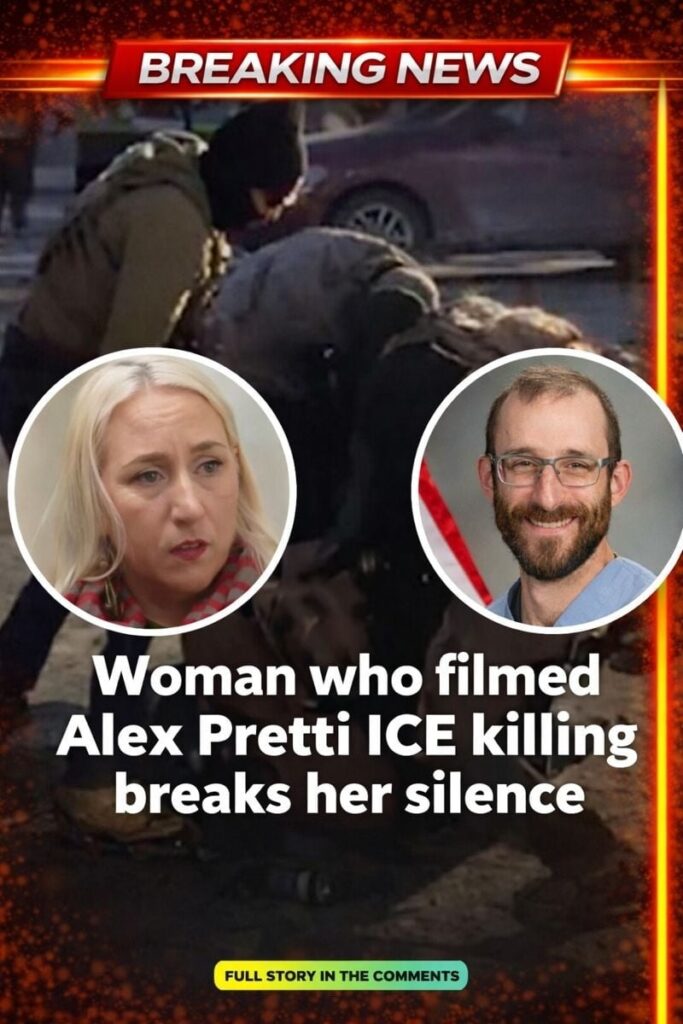
In the wake of a tragic and controversial shooting that has gripped the United States and sparked nationwide debate over federal law enforcement tactics, a Minneapolis woman who captured the fatal moments of Alex Pretti’s death has broken her silence, providing a harrowing first-hand account of what she witnessed. Identified in local reports as Stella Carlson, the witness says she filmed the encounter in which 37-year-old ICU nurse Alex Pretti was shot and killed by federal immigration agents during an enforcement operation on January 24 in the Whittier neighborhood of Minneapolis. Carlson described her emotional and traumatic experience, saying simply, “I watched him die,” and emphasized that the footage she recorded shows Pretti was calm and posed no immediate threat at the time of the shooting. Her decision to speak out comes amid deep community shock and growing calls for transparency and accountability from law enforcement.
The released videos and witness statements, including those by Carlson, directly challenge the initial narrative offered by federal officials that Pretti had presented a violent threat. Instead, bystander footage — now widely shared and corroborated in multiple news reports — appears to show Pretti holding his phone when he was confronted by agents, raising his hands after being pepper-sprayed and attempting to assist a woman who had been shoved to the ground. This sequence of events has fueled public skepticism and intense criticism of the Department of Homeland Security’s account. Pretti, a U.S. citizen and licensed handgun carrier, did not draw his weapon according to the footage and witness testimony, yet was shot multiple times at close range.
Carlson’s testimony also comes amid broader legal and political fallout. Other witnesses have submitted affidavits that contradict federal descriptions of the confrontation, asserting that Pretti’s actions were non-aggressive and that agents used excessive force. At least two Border Patrol agents involved in the shooting have since been placed on administrative leave as part of the department’s response to the incident, although details of internal reviews remain limited. President Donald Trump has publicly described the shooting as “very unfortunate” while signaling a desire to de-escalate tensions after discussions with Minnesota’s governor and Minneapolis’s mayor. Meanwhile, local officials and activists continue to press for a full, independent investigation.
The emotional impact of Carlson’s account has reverberated throughout Minneapolis and beyond. Community vigils, protests, and vigils have been held in Pretti’s memory, and his death — coming just weeks after another fatal shooting involving federal agents — has reinvigorated debates over the role of immigration enforcement and civil liberties in the United States. Carlson herself has acknowledged feeling unsafe since the shooting, and her decision to speak publicly underscores the fear and urgency felt by many who witnessed the event firsthand. As families, politicians, and civil rights advocates continue to demand clarity, Carlson’s voice adds a personal and powerful perspective to a story that has already dominated national headlines and raised profound questions about law enforcement accountability.