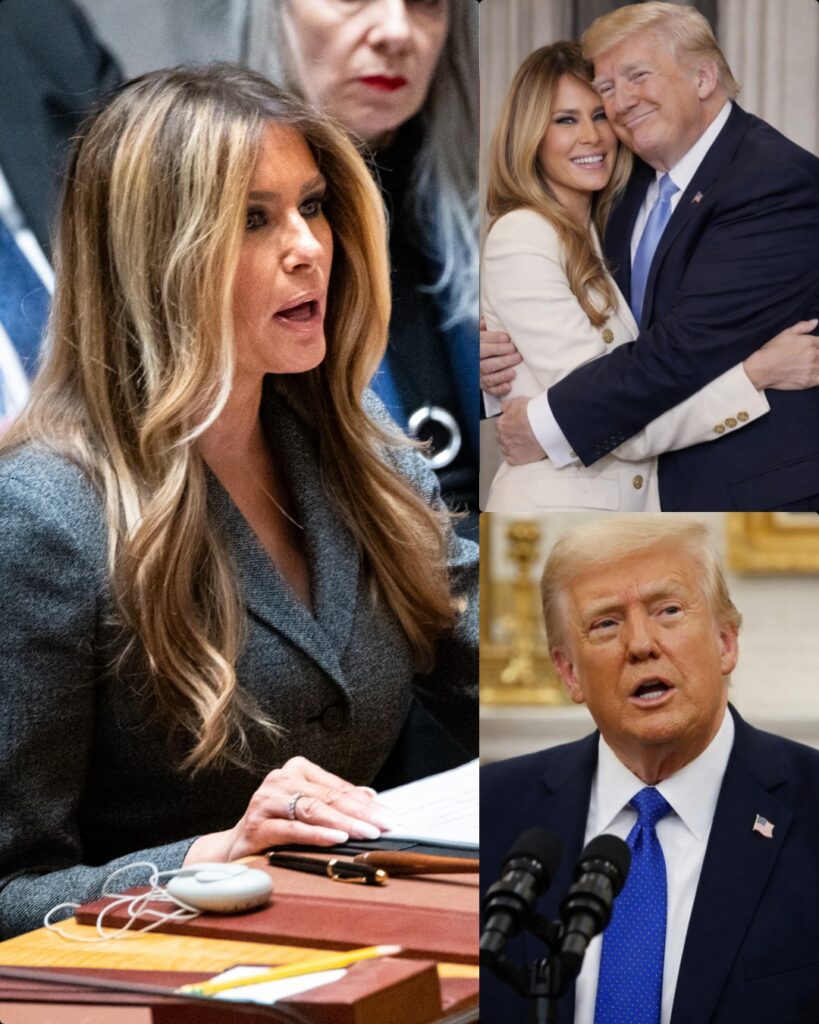
When the United Nations Security Council session came to a close, the chamber gradually emptied in the orderly way such meetings always do. Diplomats gathered their folders. Advisors exchanged final notes. Interpreters removed their headsets. Outside the building, reporters were already drafting headlines.
Melania Trump had just concluded her turn chairing the session.
The meeting focused on children, education, and the protection of young people in conflict zones — a topic that has drawn increasing attention amid rising global tensions. Throughout the proceedings, Melania maintained a composed and measured tone. She spoke deliberately, emphasizing access to education, technological support for displaced children, and the responsibility of the international community to safeguard future generations.
Her remarks were not lengthy, nor were they confrontational. Instead, they centered on humanitarian themes. Observers noted her steady delivery and careful phrasing, particularly given the politically sensitive moment in which the session took place.
The timing of the meeting amplified attention.
The United States was facing criticism abroad and at home over escalating military tensions in the Middle East. Commentators questioned optics. Political opponents debated symbolism. Supporters described the session as an important humanitarian message amid global instability.
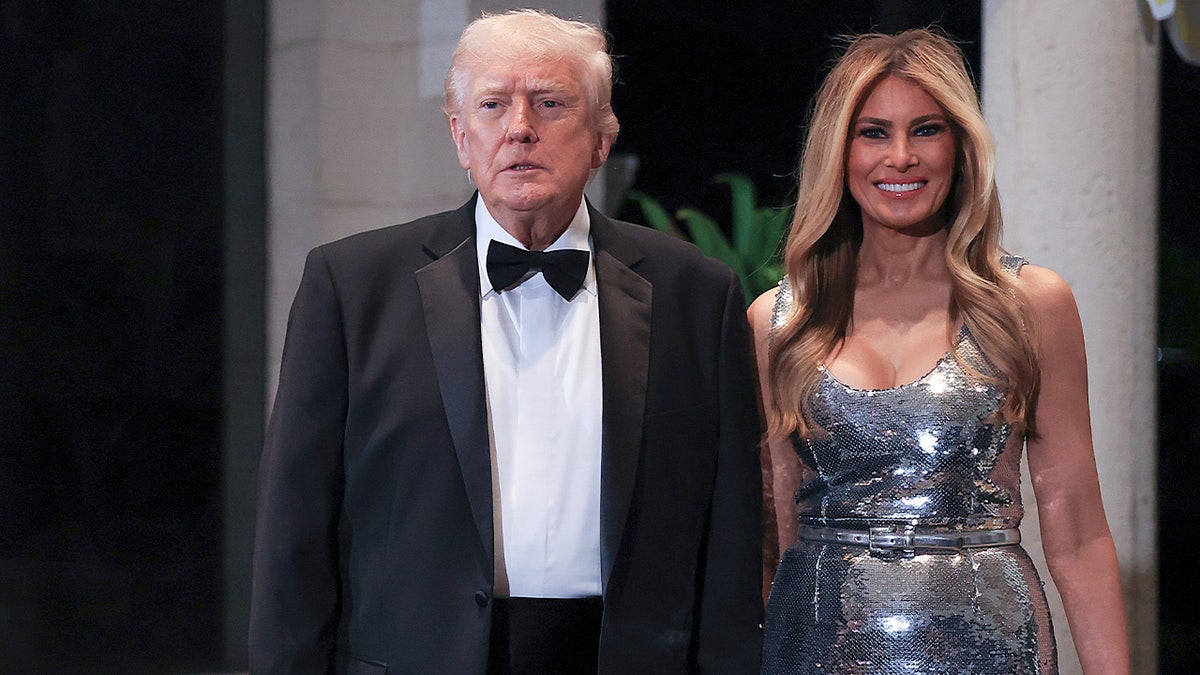
But one thing was clear: Donald Trump was not present at the Security Council chamber that day.
He did not sit beside Melania. He did not take the podium. He did not deliver remarks during the session. The focus remained on the delegates in attendance and on Melania’s role as chair.
As the meeting concluded, applause echoed politely through the room. It was diplomatic, measured — exactly what protocol dictates. Within minutes, journalists began filing analyses. Some focused on the historic nature of her participation. Others concentrated on the broader geopolitical backdrop.
By evening, the conversation had intensified.
Cable news panels debated the significance of her chairing the session. Online commentary surged. Political analysts dissected every detail — from seating arrangements to phrasing choices. In a polarized environment, even a humanitarian-focused speech became part of a larger narrative battle.
Hours later, Donald Trump addressed the moment publicly.
He did not do so from the United Nations. Instead, he issued a brief statement after the session had ended. The message was concise — far shorter than many expected given the swirl of commentary surrounding the day.
“I’m proud of you.”
Five words.
No extended rebuttal to critics.
No detailed policy defense.
No escalation of rhetoric.
Just a short expression directed at his wife.
The statement was widely circulated within minutes. Supporters highlighted it as a personal gesture during a tense political moment. Critics continued to debate the broader context of U.S. foreign policy, but even they acknowledged the unexpected simplicity of the remark.
For many observers, the contrast stood out.

The day had been filled with complex geopolitical discussions, diplomatic language, and public scrutiny. The Security Council chamber is not known for personal moments. It is a space defined by formal procedure and global consequence.
Yet the post-session response shifted the tone — at least briefly.
Rather than centering the conversation on strategy or military posture, Trump’s statement framed the day as a personal milestone for Melania. It emphasized her role in the meeting itself rather than the surrounding controversies.
Political historians noted that public expressions of support between presidential couples are not unusual. However, the timing — following a high-profile international session and amid intense debate — gave the words additional resonance.
Melania, for her part, did not immediately expand on the exchange. In subsequent appearances, she remained focused on the humanitarian themes raised during the session. Her office reiterated the importance of global cooperation in protecting children’s education in conflict areas.
Meanwhile, analysts continued to assess the broader implications of the meeting. Some viewed it as symbolic diplomacy. Others argued it represented an attempt to emphasize soft-power messaging during a period of hard-power decisions.
But outside the policy analysis, the human element lingered.
The image that circulated most widely that evening was not from inside the chamber. It was the quote itself — five simple words from a husband to his wife.
In modern politics, where statements are often crafted to signal strength or provoke reaction, brevity can sometimes speak louder than a speech.
Whether viewed as a strategic gesture or a genuine personal expression, the remark cut through the noise of the day’s arguments.
The Security Council session had ended. Delegates had gone home. The debates would continue in capitals around the world.
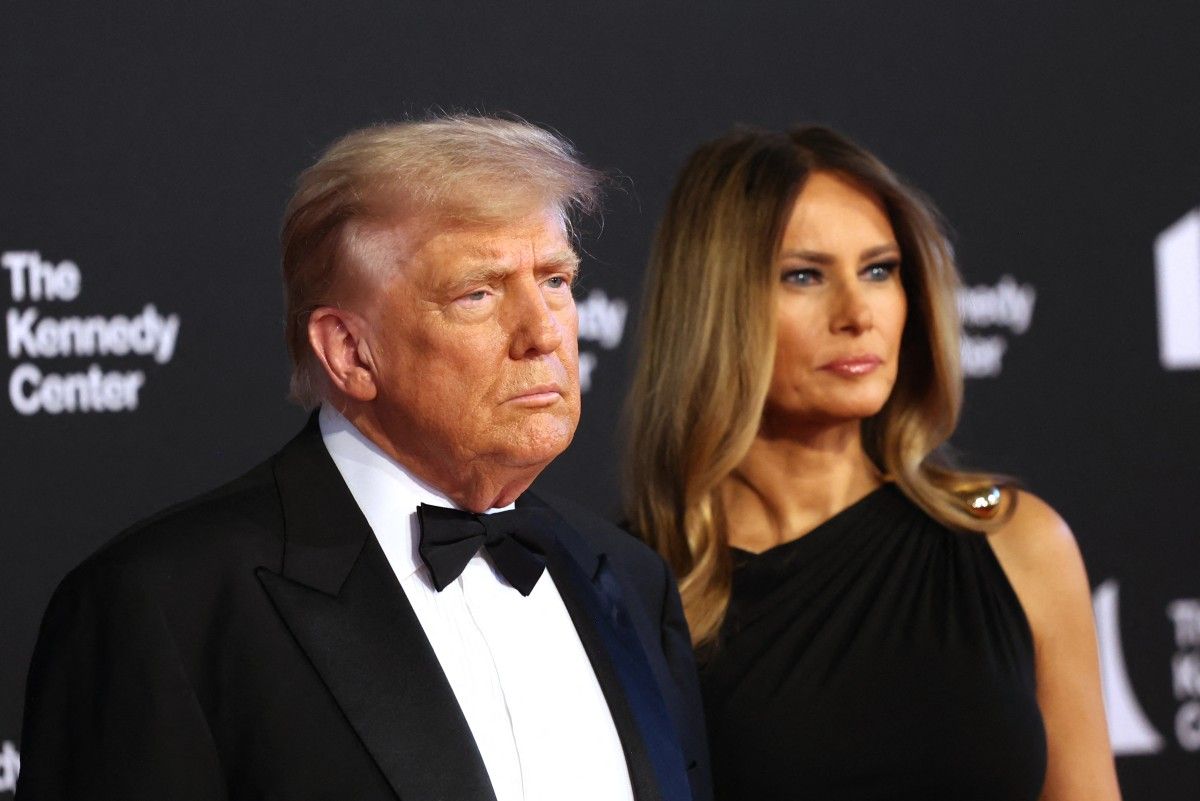
Yet for a brief moment, the global stage gave way to something more personal.
Not about diplomacy.
Not about critics.
Not about military posture.
Just a husband publicly acknowledging his wife after a moment that placed her at the center of international attention.
And in a day defined by tension, that small shift in tone became the final headline.