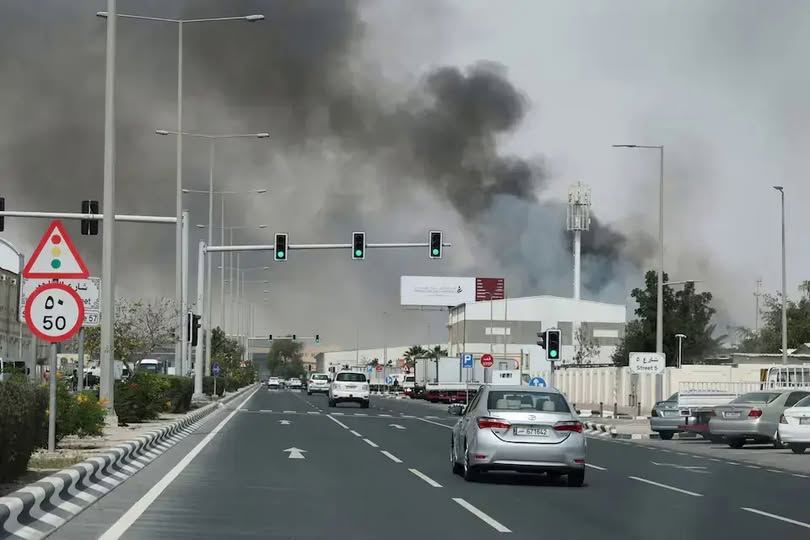
Tensions in the Middle East have risen after Iranian officials announced that more than 40 missiles were launched in what they described as the seventeenth wave of strikes targeting positions linked to Israel and the United States. The announcement was broadcast on Iranian state television and attributed to the Islamic Revolutionary Guard Corps (IRGC).
According to Iranian officials, the launches are part of a broader military campaign called Operation Honest Promise 4. The statement said missiles were fired by the IRGC’s aerospace forces toward what were described as “American and Zionist targets.”
However, the report did not provide specific details about the exact locations involved, the types of missiles used, or the extent of damage caused. Independent confirmation of the claims has not yet been released by international monitoring groups.
Iranian authorities described the latest launch as the seventeenth phase of the ongoing operation. Although the full timeline of the campaign has not been publicly outlined, the repeated waves of missile activity suggest a coordinated effort unfolding over time.
Military analysts note that the IRGC’s aerospace division manages much of Iran’s missile and drone capabilities. Their involvement could indicate the use of longer-range or precision-guided systems, which play a central role in the country’s military strategy.
The reported launches have raised concern among regional governments and international observers. Both Israel and the United States maintain military assets and partnerships throughout the Middle East, making any missile activity involving them highly sensitive.
Officials in Washington and Jerusalem have not immediately confirmed the details of the reported strikes. In past incidents, both countries relied on advanced missile defense systems designed to intercept incoming threats.
For now, much about the situation remains uncertain. Experts caution that early reports during periods of tension can be incomplete, and clearer information may emerge as defense agencies, satellite monitoring, and official briefings provide further details.