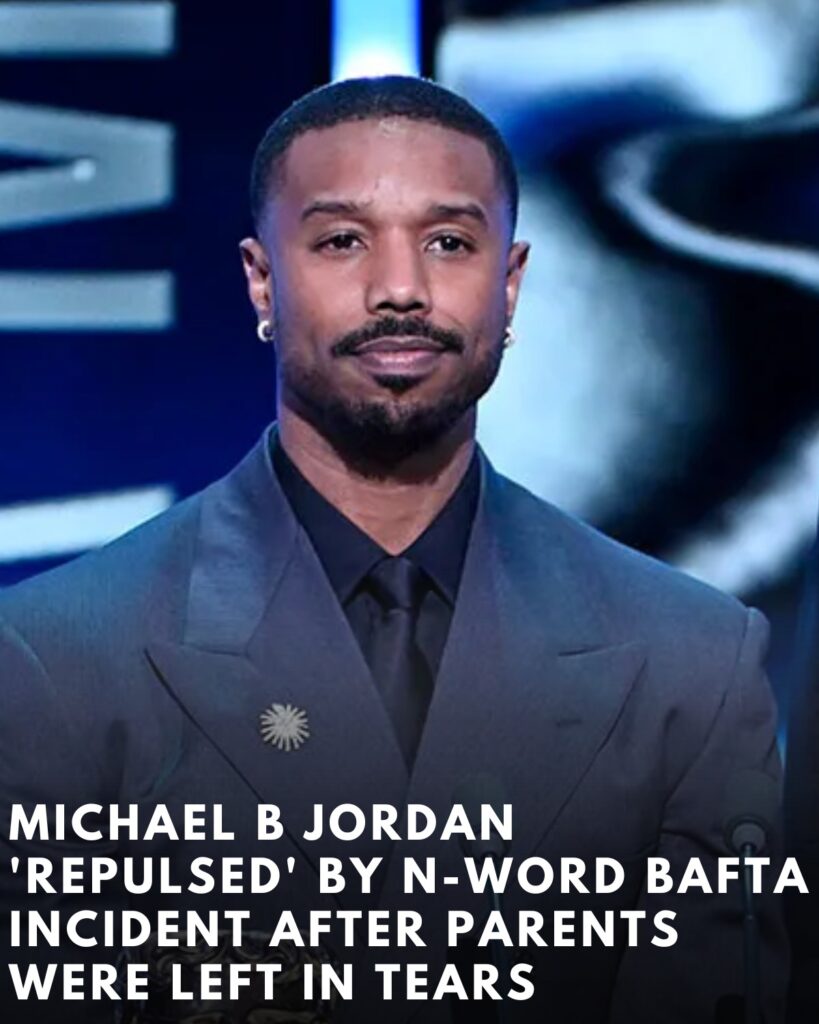
The BBC and the British Academy of Film and Television Arts have apologised after an incident at the EE BAFTA Film Awards in which a man with Tourette syndrome shouted a racial slur and other expletives during the live broadcast, prompting an on-air intervention by host Alan Cumming and drawing a strong reaction from actors presenting on stage, including Michael B Jordan.
BAFTA said the outburst occurred during a sequence of the ceremony at London’s Royal Festival Hall when John Davidson, a disability campaigner who has spoken publicly for decades about living with severe Tourette syndrome, appeared as part of the programme. Davidson is the subject of the film I Swear, which has been linked to his life and activism and has been discussed in connection with the awards season coverage.
In a statement published after the ceremony, BAFTA said it accepted “full responsibility” for the circumstances in which guests and viewers were exposed to offensive language, and apologised to those affected. BAFTA said it “deeply regret” what happened and that it had not intended to place anyone in a difficult position.
The BBC also issued an apology, saying the slur had not been edited out of the live feed. In coverage cited by entertainment and news outlets, the broadcaster said the programme team working from an outside broadcast truck “failed to hear” the word at the time and that it should not have been transmitted. The BBC said it was sorry to viewers and to those at the event who were impacted.
According to reporting that quoted attendees and footage from the live show, Davidson’s vocal tics included repeated swearing and a racial slur, leading to audible shock in the auditorium and a pause on stage. Cumming, who was hosting the ceremony, addressed the moment directly during the broadcast, telling the audience that Davidson has Tourette syndrome and that his outbursts were not deliberate.
The incident unfolded while Michael B Jordan and Delroy Lindo were on stage presenting an award. Reporting described the pair as reacting visibly and stepping back during the outburst, as the atmosphere in the room shifted and the broadcast briefly focused on managing the disruption.
In the hours after the ceremony, Davidson issued his own statement describing the outburst as involuntary and rooted in his condition. In comments reported by multiple outlets, he said he was “deeply mortified” by what happened and stressed that the words were not a reflection of his views.
The incident has also reopened public discussion about how Tourette syndrome is represented, and how broadcasters and event organisers anticipate and manage complex vocal tics in live settings. Tourette syndrome is a neurological condition characterised by motor and vocal tics, which can include noises, words and phrases that people cannot easily control. Coprolalia, the involuntary utterance of socially inappropriate or obscene words, is widely described by clinicians and public health bodies as uncommon among people with Tourette syndrome.
The US Centers for Disease Control and Prevention says coprolalia affects “about 1 in 10” people with Tourette syndrome and notes that the stereotype of constant swearing is a common misconception. The Tourette Association of America similarly says the symptom affects approximately 10% of people with Tourette syndrome, though it has also said it can be exaggerated in portrayals.
Davidson has been a high-profile figure in British public life on disability and mental health issues, having appeared in earlier television documentaries and interviews discussing his tics, the stigma around Tourette syndrome, and the impact on daily life. Previous reporting has described him as having severe symptoms, including complex vocal tics, and as having used his platform to challenge misconceptions and push for better understanding of tic disorders.
The BAFTA incident has been framed by organisers and the broadcaster as a failure of live editorial control and risk management rather than an issue of intent by Davidson. BAFTA’s statement indicated it would review what happened and consider what changes were needed for future events. The BBC’s apology signalled a similar focus on broadcast safeguards, acknowledging that the word should not have reached air.
While some online reactions defended Davidson on the basis that tics can be uncontrollable, others criticised the ceremony’s handling of the moment and questioned why stronger delays or bleeping were not in place for a live programme. Disability advocates have long argued that increased public awareness of Tourette syndrome should be matched by practical accommodations that reduce harm, particularly when live broadcasting can amplify moments that people living with the condition later describe as deeply distressing and humiliating.
For Michael B Jordan, the on-stage disruption took place in the context of a ceremony that is closely watched by the film industry and the public. Reporting around the incident has suggested the actor found the moment upsetting, though he has not, at the time of the coverage reviewed, issued a detailed public statement in his own words about the episode. What is clear from BAFTA’s and the BBC’s responses is that the organisations involved treated the transmission of the slur as a serious failure, and that Davidson’s own response focused on remorse and the involuntary nature of the tic.
The controversy has also highlighted a persistent tension in public understanding of Tourette syndrome. Medical and public health sources emphasise that Tourette is defined by involuntary tics that can fluctuate in frequency and intensity, and that people may try, not always successfully, to suppress them in certain environments. The Mayo Clinic notes that Tourette syndrome involves repetitive movements or unwanted sounds that “can’t be easily controlled,” and that vocal tics can include “offensive words.”
In the aftermath, BAFTA and the BBC faced questions about duty of care to guests and viewers, as well as to Davidson himself. Organisers did not suggest Davidson had acted with malice. Instead, their statements placed responsibility on the event and broadcast structures that allowed a slur to be heard in the hall and then transmitted to a mass audience.
The incident leaves BAFTA, the BBC and the wider live events industry confronting the same practical issue: how to respectfully include people with complex disabilities in major televised events while reducing the chance that a condition associated with involuntary speech causes foreseeable harm. Davidson’s statement, BAFTA’s acceptance of responsibility and the BBC’s admission of an editorial failure collectively underline that, whatever the intention, the impact of a racial slur broadcast into homes was immediate and serious, and that future ceremonies will be judged on whether they learn from what happened.