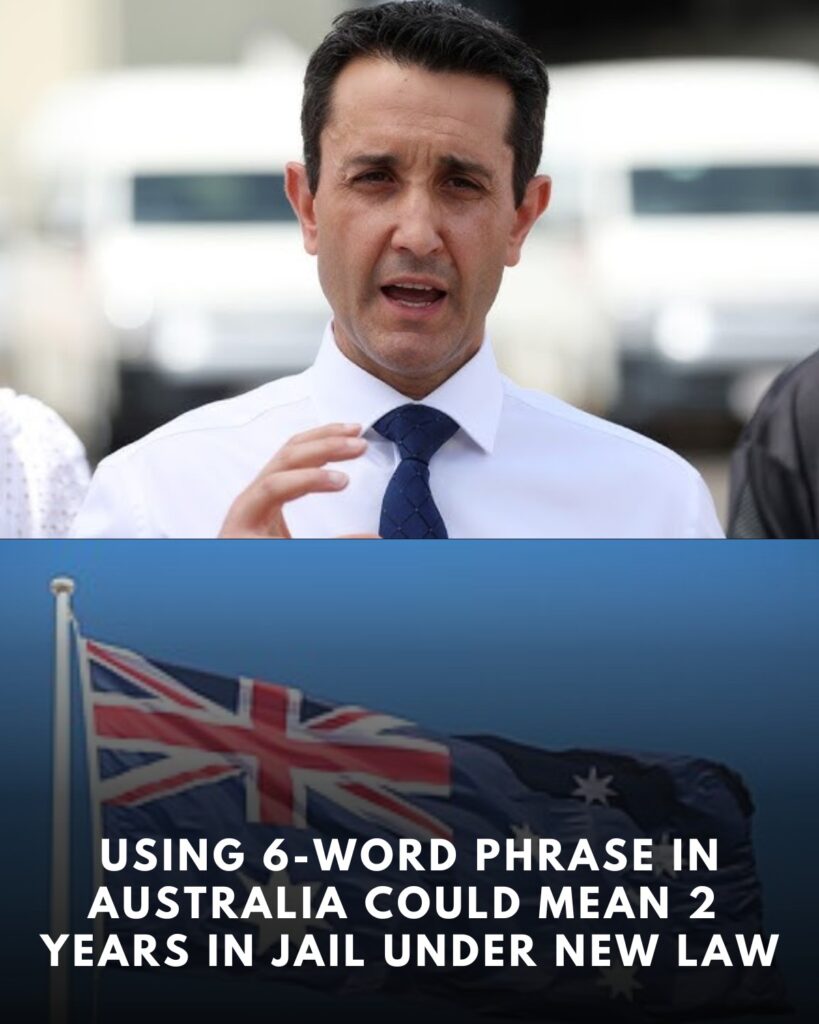
Queensland has become the first Australian state to outlaw the public use of two pro-Palestinian slogans in certain circumstances, after the state parliament passed sweeping new hate speech laws that the government says are aimed at combating antisemitism and protecting faith communities after a deadly terrorist attack in late 2025. Under the new law, the phrases “from the river to the sea, Palestine will be free” and “globalise the intifada” can now attract criminal penalties of up to two years in prison if they are used in a way that a reasonable person would regard as menacing, harassing or offensive.
The legislation was introduced by Premier David Crisafulli’s government as part of a broader package of reforms that also strengthens bans on hate symbols and expands protections around places of worship and religious communities. In announcing the measures, Crisafulli said the government had promised to act and was now delivering “a strong and considered response”, adding: “This is about drawing a clear line and stamping out the embers of hatred that were allowed to burn unchecked for too long – to ensure we protect Queenslanders.” Attorney-General Deb Frecklington said the targeted slogans had “no place in Queensland” when they were used “to incite hatred, offence and menace.”
The move followed months of heightened tension in Australia after the Bondi attack in December 2025, which Queensland officials have repeatedly cited as a turning point in the debate over antisemitism, extremist violence and public order. According to reporting by ABC and the Queensland government’s own statements, the state framed the reforms as part of a response to rising fear within Jewish communities and to conduct that ministers said had crossed the line from political protest into intimidation. The legislation passed parliament last week and came into effect almost immediately, setting up a direct test of how far police and prosecutors would go in enforcing the new rules.

That test came quickly. Within hours of the law taking effect, Queensland police arrested two protesters outside state parliament during a pro-Palestinian demonstration in Brisbane. ABC reported that a 33-year-old man was charged after allegedly reciting the banned phrase during a speech, while an 18-year-old woman was issued with an adult caution after wearing the slogan on clothing. SBS and other Australian outlets similarly reported that the arrests were the first made under the new regime, immediately turning the law from a political proposal into a live legal and civil liberties battle.
Police said the new laws would be enforced where the threshold set out by parliament had been met, while ministers defended the response as a straightforward application of legislation that had been clearly debated in public. Supporters of the reforms, including sections of Queensland’s Jewish leadership, said it was important that the law not remain symbolic. Jason Steinberg, president of the Queensland Jewish Board of Deputies, told ABC it was “heartening” to see the legislation being enforced and rejected arguments from activists that the phrase was necessarily benign in context. The government has argued throughout that the issue is not merely the words themselves in abstraction, but the way they are used and the effect they can have on members of the public, particularly Jewish Queenslanders.
Critics, however, say the law has opened a dangerous new chapter in Australia’s debate over free expression, protest rights and the boundaries of political speech. Civil liberties advocates, pro-Palestinian organisers and some legal observers have argued that the slogans are widely used by activists as calls for Palestinian freedom and human rights, not as incitements to violence. They say the legislation risks criminalising political dissent and empowering police to make subjective judgments about offence. The Human Rights Law Centre described the law as rushed and discriminatory, while lawyers quoted by Australian media have suggested the provisions could face constitutional challenge.
The phrase “from the river to the sea, Palestine will be free” has for years sat at the centre of fierce international dispute. Supporters say it expresses a demand for freedom, dignity and equal rights for Palestinians across the territory between the Jordan River and the Mediterranean Sea. Opponents, including many Jewish organisations and Israeli supporters, argue that the slogan is inherently threatening because it can be read as denying Israel’s right to exist. Queensland’s law does not ban all discussion of the phrase in every context, but it specifically criminalises its public use where it is judged to menace, harass or offend. That wording is now likely to be crucial in any court challenge or prosecution.
“Globalise the intifada”, the second phrase named in the legislation, is similarly contested. For many of its critics, the phrase invokes violent uprisings and is inseparable from the history of attacks against Israelis and Jews. For many activists, it is used as a political slogan of resistance and solidarity. Queensland ministers have chosen to place both expressions into the same legal category, arguing that they have become associated with conduct that goes beyond protest and into hate speech. That decision has made the state an outlier not only within Australia but also among many Western democracies, where the same slogans remain controversial but are not generally singled out in criminal statute by name.
The political stakes are high for Crisafulli, who has presented the reforms as evidence of decisive leadership on law and order, community protection and antisemitism. His government moved quickly after taking office to position itself as tougher than its predecessors on hate-related offences, and the legislation has been promoted as one of its most significant early law-and-order measures. Frecklington, a senior figure in Queensland politics with a long career in the Liberal National Party, has taken a leading role in defending the bill as carefully framed rather than sweeping, insisting the laws are directed at conduct that targets and intimidates others, not at private belief or legitimate discussion.
Yet the arrests this week have already intensified claims that the law’s real-world effect will be broader than ministers suggested. Protest groups accused police of deliberately attending the Brisbane rally looking to make examples of demonstrators, an allegation police rejected. The organising group Students for Palestine said the response showed the legislation was being used to suppress dissent rather than prevent genuine hatred. Greens MP Michael Berkman was among those who compared the scene to a darker era in Queensland’s political history, while other opponents said the government was conflating criticism of Israel and support for Palestinian rights with antisemitism.
What happens next will matter far beyond Queensland. The first criminal case arising from the law will be closely watched by lawyers, campaigners and political leaders across Australia. Courts may be asked to determine how “offence” should be judged, whether the phrases can be treated as inherently hateful in law, and how the new provisions fit with constitutional protections for political communication. In the meantime, Queensland’s government is standing by the legislation, Jewish community leaders who supported it say it addresses a climate of fear that could not be ignored, and activists are preparing to challenge what they see as a landmark restriction on political speech. What began as a bitter argument over two slogans has now become a defining test of how a democratic society responds when protest, identity, grief and public safety collide.