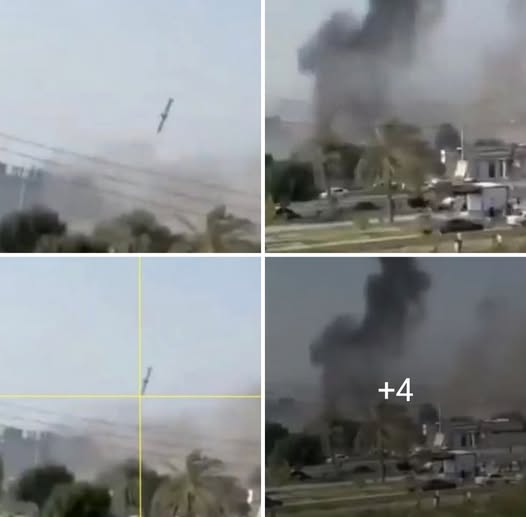
Reports of an explosion near a girls’ school in southern Iran have drawn international attention and prompted calls for a thorough investigation. The incident occurred in the city of Minab, located in southern Iran, where a powerful blast reportedly damaged a school building and caused panic in the surrounding neighborhood.
Initial accounts from local sources suggested that several people were injured, including students who were inside the school at the time of the explosion. Emergency responders quickly arrived at the scene, transporting the injured to nearby hospitals while authorities began assessing the extent of the damage.
While early reports circulating online speculated about the type of weapon involved, officials and military analysts say it is too early to confirm exactly what caused the explosion.
What Happened in Minab
The blast reportedly took place during school hours in Minab, a city in Hormozgan Province. Witnesses described hearing a loud explosion that shook nearby buildings and sent people running into the streets.
Residents reported seeing smoke rising from the area shortly after the blast. Emergency services, including firefighters and medical teams, were dispatched quickly to the location.
According to early reports from local authorities, the explosion damaged part of the school building and surrounding structures. Windows were shattered, and debris was scattered across the area.
Several individuals were reportedly injured in the incident. While exact numbers have not been officially confirmed, local media indicated that some of the injured were students present in the school at the time.
Conflicting Early Reports
As often happens during breaking news events, information about the cause of the explosion has varied widely.
Some initial claims shared online suggested that the weapon involved might have been a Raduga Kh‑55, a long-range cruise missile originally developed during the Cold War.
However, defense experts caution that such early claims should be treated carefully until investigators complete a full analysis of the evidence.
Missile identification typically requires detailed examination of debris, fragments, and other physical evidence collected at the scene.
Until those investigations are completed, officials say it is not possible to confirm the exact weapon used.
What Is the Raduga Kh-55?
The Raduga Kh‑55 is a long-range air-launched cruise missile developed by the Soviet Union during the late Cold War period.
The missile was designed primarily for strategic military purposes and has been used as part of long-range strike capabilities by certain air forces.
Key characteristics of the Kh-55 include:
Air-launched cruise missile design
Long operational range
Ability to fly at low altitudes to avoid radar detection
Guidance systems designed for precision targeting
Because of its strategic nature, the missile has historically been associated with major military operations rather than isolated incidents.
That is why analysts stress that identifying any missile type requires careful investigation.
Why Confirmation Takes Time
When explosions involving potential military weapons occur, investigators typically follow several steps before drawing conclusions.
These steps may include:
Collecting physical debris from the blast site
Analyzing fragments to identify materials and manufacturing signatures
Examining blast patterns to determine how the explosion occurred
Reviewing radar or satellite data if available
Only after this process can investigators determine what type of weapon or explosive caused the damage.
Because of these complexities, early claims shared on social media are often revised as new evidence becomes available.
Concerns Over Civilian Safety
Regardless of the weapon involved, the incident has raised serious concerns about civilian safety.
Schools are considered protected civilian infrastructure under international humanitarian principles. Any incident affecting a school building—especially during hours when students are present—draws immediate attention from global observers and human rights organizations.
The presence of students during the explosion has intensified calls for a transparent investigation.
Many observers emphasize that protecting civilians remains one of the most important priorities during periods of political tension or conflict.
International Reactions
News of the explosion quickly spread beyond Iran, prompting responses from international organizations and governments.
Global observers have urged caution in assigning responsibility until the investigation produces reliable evidence.
Diplomatic statements from several countries emphasized the need for clarity about what happened and why the school building was affected.
International humanitarian groups also expressed concern about the safety of students and teachers in areas where tensions may lead to violence.
The Role of Investigators
Authorities in Iran have reportedly begun examining the site to determine the cause of the blast.
Investigators are expected to:
Document structural damage to the building
Collect debris from the impact area
Interview witnesses who were present during the incident
Review any available surveillance footage
Such investigations can take time, particularly when the explosion involves complex mechanical or military components.
Officials say their goal is to establish an accurate timeline and determine what caused the explosion.
The Impact on the Local Community
For residents of Minab, the incident has been deeply unsettling.
Schools are typically viewed as safe spaces where children can learn and grow. When such locations are affected by violence or explosions, it can create lasting emotional effects on students, teachers, and families.
Local authorities have reportedly begun assessing whether the school building can continue operating safely or if temporary arrangements will be needed for students.
Community leaders have also emphasized the importance of supporting those who were injured or traumatized by the event.
The Spread of Unverified Information
In the hours following the explosion, numerous posts appeared online claiming to know exactly what had happened.
Some of these posts identified specific missile types or accused particular groups of responsibility.
However, experts warn that early information during breaking events is often incomplete or inaccurate.
Social media can spread unverified claims quickly, making it difficult for the public to distinguish confirmed facts from speculation.
For this reason, analysts encourage people to rely on verified reports from official investigations rather than initial online rumors.
Why Schools Are Sensitive Locations
International humanitarian norms emphasize that schools should remain protected during conflicts whenever possible.
Educational institutions are critical for the well-being and development of young people. When schools are damaged or disrupted, the consequences extend beyond the immediate incident.
Students may experience fear, stress, and interruptions to their education.
Communities may also struggle to rebuild trust and stability after such events.
This is why incidents involving schools often receive significant global attention.
The Broader Context of Regional Tensions
The Middle East has experienced periods of political and military tension for many years.
Although the cause of the Minab explosion remains under investigation, events like this often occur within broader regional contexts.
Analysts frequently examine factors such as:
regional political disputes
military operations
cross-border tensions
internal security challenges
Understanding these factors can help investigators determine whether an incident is accidental, deliberate, or connected to larger developments.
The Importance of Accurate Information
Accurate reporting plays a crucial role in situations like this.
When early reports are unclear, misinformation can quickly spread and create confusion.
Responsible journalism focuses on verified facts and acknowledges when information is still uncertain.
In this case, investigators are still working to determine what caused the explosion and whether any military equipment was involved.
Until that process is complete, conclusions remain preliminary.
Support for the Victims
Medical teams in the region have reportedly been treating those injured in the blast.
Local authorities have expressed concern for the well-being of the students and staff who were affected.
Community support services may also play an important role in helping families and students recover emotionally from the event.
Schools often work closely with counselors and educators to ensure that students feel safe returning to their classrooms after traumatic incidents.
Looking Ahead
As investigators continue examining the blast site, additional information is expected to emerge.
Detailed analysis of debris and forensic evidence may eventually determine:
the cause of the explosion
whether a missile or another weapon was involved
how the event unfolded
These findings will likely shape both local and international responses to the incident.
Conclusion
The explosion near a girls’ school in Minab has raised serious questions and drawn attention from observers around the world.
While some early reports speculated about the involvement of a Raduga Kh‑55, experts emphasize that no official confirmation has yet been provided.
Investigators are continuing to analyze evidence from the scene to determine exactly what happened.
In the meantime, the focus remains on supporting those affected and ensuring that accurate information emerges through careful investigation.
The incident serves as a reminder of the importance of protecting civilians—especially students—and maintaining transparency whenever such events occur.