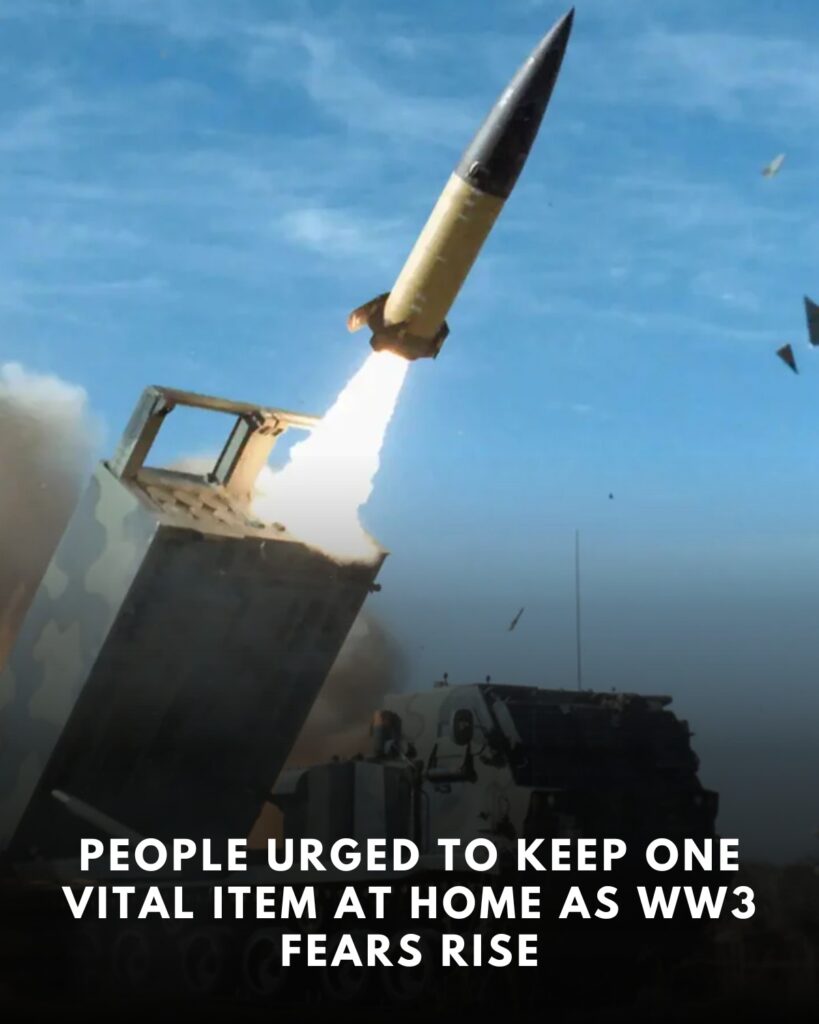
As fears over global instability continue to shape public discussion in Britain, official advice to households has focused on a practical question rather than sensational predictions: how prepared people would be if everyday systems suddenly failed. The item singled out in recent guidance is a battery-powered or wind-up radio, recommended by the UK government as part of a wider emergency kit intended to help households cope during power cuts and other serious disruptions.
The advice comes from the government’s Prepare campaign, a resilience initiative first launched in May 2024 to encourage the public to think ahead about emergencies ranging from flooding and fires to cyber attacks and infectious disease outbreaks. The website does not present itself as a manual for imminent war, nor does it tell people to panic-buy supplies. Instead, it lays out what ministers have described as “simple and effective steps” to make homes more resilient if communications, electricity or transport networks are interrupted. The official list includes a battery or wind-up torch, a portable power bank for charging a mobile phone, a battery or wind-up radio, spare batteries, and a first aid kit.
The reason the radio has drawn so much attention is that it sits at the intersection of several risks at once. In a prolonged power cut, mobile phone batteries can die, broadband routers stop working, and people may lose access to live updates if they rely entirely on internet-connected devices. Government guidance says a battery or wind-up radio can still provide updates during a power cut, while noting that a car radio may also work, although in severe weather it may be safer to stay indoors. It is a low-tech answer to a modern vulnerability: the possibility that in a serious emergency, the devices people normally depend on for information may not be available.
That concern was made explicit when Oliver Dowden, then deputy prime minister, launched the campaign at the London Defence Conference. In his speech, he asked: “If there was a national power outage, how many of us have torches and batteries?” He then went further: “And if there was a cyber attack, how many of us have the means to listen to the radio without mains power or wi-fi?” Dowden said at the time that the government was not urging people to become “doomsday preppers”, but to adopt “sensible safeguards” after the lessons of Covid and other crises showed how quickly normal life can be disrupted.
Public preparedness levels appeared limited when the campaign began. ITV reported at the time that a poll released alongside the launch found only 15% of people had an emergency supply kit at home, while more than 40% did not have three days’ worth of non-perishable items. That gap between official advice and household readiness has helped explain why renewed discussion around war, cyber disruption and energy security has given the campaign fresh attention. The government’s message has been that resilience is not only about military planning or state infrastructure, but also about what ordinary people can do in their own homes before a crisis happens.
The broader backdrop to the story is Britain’s own increasingly stark language about national security. In the government’s 2025 National Security Strategy, ministers said the country must now “actively prepare for the possibility of the UK homeland coming under direct threat, potentially in a wartime scenario.” The same strategy warned that “the threat to the UK and our allies from nuclear weapons is once again growing,” adding that the challenge may now be more complex than during the Cold War because of proliferation, disruptive technologies and the erosion of arms control arrangements. Those passages did not amount to a forecast of world war, but they did reflect a harder tone from government about the strategic environment Britain faces.
That harsher assessment has also fed wider public anxiety about what kinds of emergencies households should realistically prepare for. The National Risk Register, updated in 2025, said the UK faces a “broad and diverse range of risks” spanning terrorism, cyber threats, state threats, accidents and systems failures, natural and environmental hazards, health crises, societal risks, and conflict and instability. The register said it underpins public guidance on the Prepare website and forms part of a wider effort to build resilience against shocks that could disrupt lives, infrastructure and essential services. In other words, the advice about radios, batteries and power banks is tied less to a single nightmare scenario than to a government effort to normalise basic readiness across multiple possible crises.
That distinction matters because some of the social media discussion around the article has framed the guidance almost entirely through the lens of a looming third world war. The official advice is wider than that. The Prepare site refers to emergencies such as flooding, fires and power cuts, and encourages practical steps such as writing down important phone numbers on paper, checking whether vulnerable people are registered for priority utility support, and keeping key supplies in the home. It also tells people to note the frequencies of local and national radio stations for news updates, another sign that officials view radio access as a core part of emergency communication when digital systems are unavailable.
The emphasis on communication also reflects the way recent crises have changed official thinking. The Covid pandemic exposed how heavily the country relies on interconnected supply chains, central services and rapid access to information. More recently, cyber incidents, severe weather events and concerns about hostile state activity have reinforced the idea that disruption may come in forms that are not immediately dramatic but still leave households temporarily isolated. In that context, the government’s recommended radio is not a relic or a theatrical survivalist prop. It is being presented as a simple way to remain informed when smartphones, wi-fi and mains electricity cannot be taken for granted.
The Prepare campaign also stops short of urging people to hoard supplies. Dowden specifically warned against “stockpiling”, and official messaging has consistently focused on proportionate preparation rather than fear-driven accumulation. The campaign toolkit describes the advice as accessible and actionable, aimed at improving resilience among individuals, households and communities. The tone is deliberately ordinary: check your smoke alarm, keep numbers written down, think about neighbours who may need help, and keep a few essential items ready in case the lights go out.
So while the headline language around “WW3 fears” captures a public mood shaped by wars abroad and harder official warnings at home, the underlying story is more practical than apocalyptic. The item the government wants households to have ready is a battery or wind-up radio, not because ministers are predicting imminent catastrophe, but because they believe the country is entering a period in which resilience matters more than many people had assumed. In a power cut, a cyber incident or any wider emergency that interrupts daily life, the ability to hear verified updates may turn out to be one of the most useful things in the house.