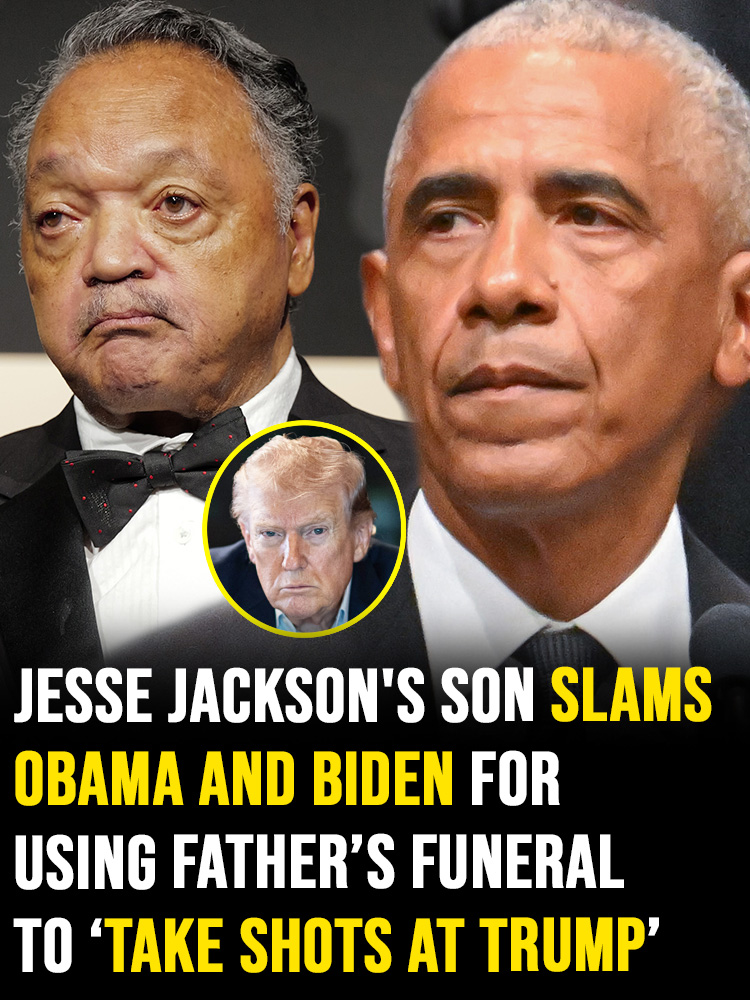
In Chicago’s House of Hope, the world gathered to say goodbye to a man who had walked beside Martin Luther King Jr. and spent his life unsettling the powerful. Jesse Jackson’s passing at 84, after years battling progressive supranuclear palsy and Parkinson’s, should have been a moment of unbroken remembrance. Instead, as Barack Obama and Joe Biden folded warnings about democracy, division, and Donald Trump into their tributes, the room filled with both applause and unease.
At a quieter, private service the next day, that unease erupted into words. Jesse Jackson Jr. accused the presidents of not truly knowing his father, insisting Jackson’s mission was never about party, but about “the disinherited, the damned, the dispossessed, the disrespected.” To him, the prophetic edge of his father’s legacy was blunted by political framing. Obama and Biden have stayed silent, leaving a haunting question hanging over Jackson’s legacy: who, in the end, gets to define the life of a man who refused to sell his people out?