THE conclave is set to gather to choose the next pope in an ancient and secret process that has remained unchanged for 1,000 years.
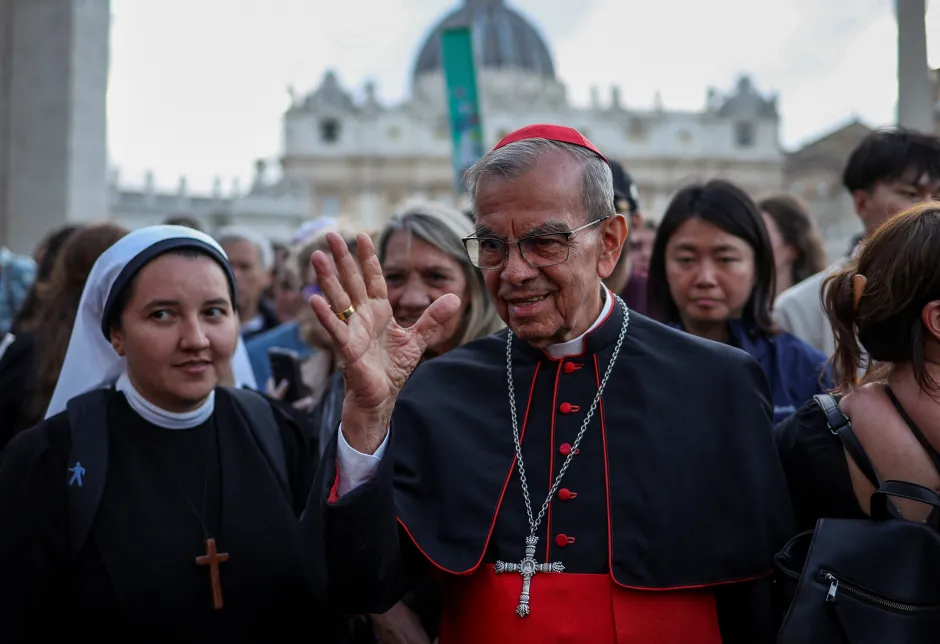
Cardinals from across the world have begun arriving in the Vatican ahead of the historic event, as speculation as to who will be the next pontiff grows.
The ritual of electing a new pope is set to begin on Wednesday, following the conclusion of the mourning period for the late Pope Francis.
Preparations for the historic event are already underway, with cardinals and visitors arriving in the holy city.
The democratic process involves multiple rounds of voting by cardinals under the age of 80, who form the conclave.
The voting continues until a clear successor is chosen by consensus.
To be elected pope, a candidate must secure a two-thirds majority of the vote, with each cardinal’s ballot carrying equal weight.
All cardinals from around the world are summoned to Rome for the conclave, with 133 of the current 252 expected to participate.
While the official requirements to become pope are simply that a candidate be a Catholic male, for centuries the position has been filled exclusively from the ranks of cardinals.
Since 1492, the Papal Conclave has been held within the Sistine Chapel, where participating cardinals are traditionally secluded until a new pope is chosen.
Today, while the cardinals cast their votes inside the Sistine Chapel, the conclave itself is based at the Domus Sanctae Marthae, a residence adjacent to St. Peter’s Basilica.
This five-story, 130-room guesthouse was commissioned by Pope John Paul II to house the cardinals during the conclave, ensuring they remain sequestered together throughout the election process.
Each morning, at around 9 a.m., the cardinals make the short, 500-metre walk around St. Peter’s Basilica to the Sistine Chapel, where the voting takes place.
The Domus Sanctae Marthae, an impressive five-story, 130-room guesthouse built by Pope John Paul II, has comfortably accommodated the last two conclaves, which involved 115 electors. However, with 133 cardinals participating this year, space is slightly more limited.
To preserve absolute secrecy, all televisions, radios, telephones, and internet connections have been removed from the building, and Wi-Fi access has been disabled.
This strict isolation is part of the centuries-old tradition from which the word “conclave” originates — derived from the Latin cum clave, meaning “with a key” — a practice dating back to 1268.
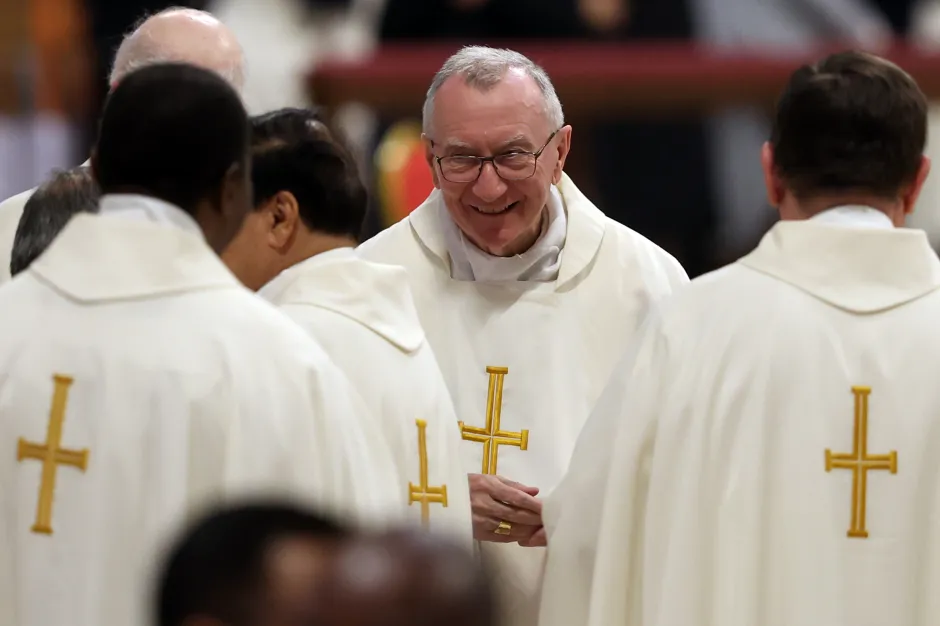
Voting and Smoke Signals
Before voting can begin, the cardinals are required to take a solemn oath pledging to maintain the utmost secrecy regarding the proceedings of the conclave. They must also vow to faithfully fulfill the responsibilities of the papacy, should they be elected.
It isn’t only the cardinals who swear this oath. Everyone involved in the conclave — from bishops and priests to doctors, drivers, and domestic staff — must also pledge secrecy.
Once these oaths are made, the master of papal liturgical celebrations formally orders all non-participants to leave the Sistine Chapel, leaving only the cardinals behind. Before departing, the master and a designated ecclesiastic remain briefly to deliver a final address, reminding the electors of the challenges facing the Church and the gravity of their decision.
After this, the chapel doors are closed, and the conclave enters a state of complete isolation as the cardinals begin their task of selecting a new pope.
It is only at this point that the conclave officially begins.
Each cardinal discreetly writes the name of their chosen candidate on a slip of paper, using disguised handwriting to preserve anonymity. The ballots are then folded in half and, one by one, placed into an urn at the altar of the Sistine Chapel.
Three cardinals, selected at random to serve as scrutineers, collect, mix, and count the votes. The third scrutineer sews together the completed ballots, which are then burned in a special stove.
The voting process continues in multiple rounds until a clear decision is reached. Historically, to expedite the process, if no pope was chosen after three days, cardinals were limited to a single meal per day. Should five more days pass without resolution, the diet was further restricted to just bread and water.
A more recent rule now allows for a candidate to be elected with an absolute majority — 50 percent plus one vote — if no consensus is reached after 12 days of voting.
Ballots are cast twice each morning and twice each afternoon. After each round, the ballots are burned in a stove within the Sistine Chapel. Black smoke signals an inconclusive vote, while white smoke — known as fumata bianca — indicates that a new pope has been elected. The smoke is now chemically treated to ensure clarity, following instances in previous years when the color was difficult to distinguish.
This symbolic smoke signal, along with the ringing of the bells of St. Peter’s Basilica, announces to the world that the Catholic Church has a new pontiff. Though the exact origins of this ritual are uncertain, it has been consistently used to proclaim the election of a pope since at least 1878.
To preserve the integrity and secrecy of the conclave, extensive security measures are in place. The Sistine Chapel is swept for hidden recording devices, cameras, and listening equipment. Mobile phones are strictly banned, and signal jammers have been installed to prevent any electronic communications. Windows are covered to shield the proceedings from outside view, and measures are taken to thwart potential drone surveillance.

A New Pope Is Declared
Once a candidate secures the required number of votes, the Cardinal Dean formally asks the elected pontiff if they accept the position. Upon accepting, the new pope announces the name he will assume, traditionally chosen in honor of a saint or a previous pope whose legacy he wishes to uphold.
Following this, the new pontiff is led to the Room of Tears, a private chamber within the Sistine Chapel. The room earns its name from the overwhelming emotion said to overcome new popes in this pivotal moment.
There, the pontiff dresses in his papal vestments, prepared in advance by the renowned Roman tailors, Gammarelli. Three sets of robes — in small, medium, and large — await, each including a white cassock, a white silk sash, a white zucchetto (skullcap), red leather shoes, and a red velvet mozzetta with ermine trim. The pope dons these garments alone, along with a gold-corded pectoral cross and a red embroidered stole.
Once ready, the new pope prepares to address the world. The Cardinal Dean first appears on the central balcony of St. Peter’s Basilica, overlooking a crowd of more than 100,000 gathered in St. Peter’s Square. With great ceremony, he proclaims the historic words: “Habemus Papam” — “We have a pope.”
The newly elected pope then steps onto the balcony to deliver his first blessing, the Urbi et Orbi, meaning “To the City and to the World,” officially marking the beginning of his papacy.
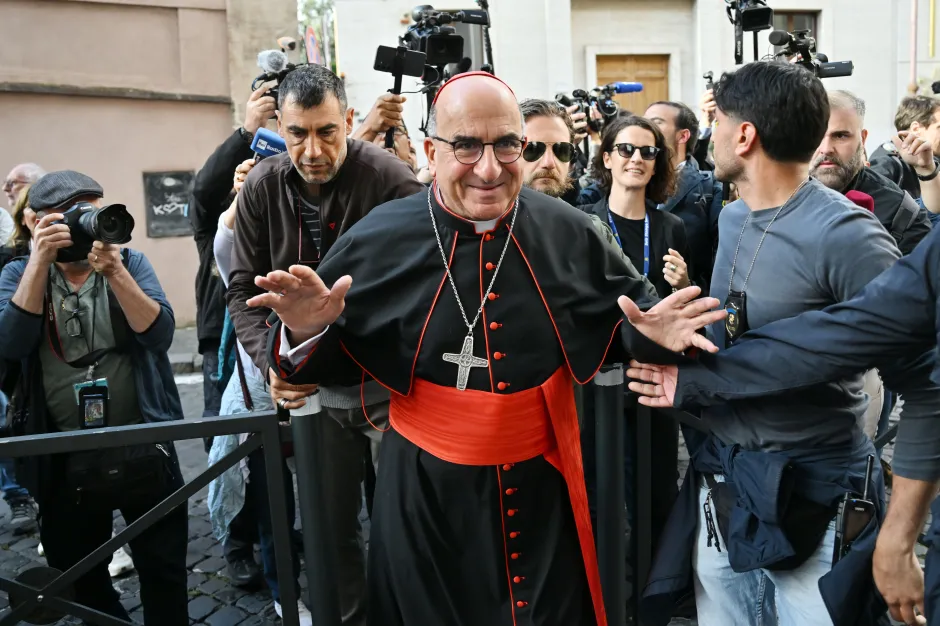
Who Will Be the Next Pope?
Speculation continues to mount over who will succeed to the papacy.
According to UK theologian Professor Anna Rowlands, predicting the outcome is particularly difficult this time, as the composition of the current College of Cardinals is unlike any seen in previous conclaves.
Nonetheless, several prominent figures have emerged as frontrunners. Among them is Cardinal Luis Tagle, a 67-year-old from the Philippines, widely regarded as Pope Francis’s favored candidate to become the first Asian pope in history.
Other frequently mentioned contenders include Cardinal Peter Erdo, 72, the Archbishop of Budapest; Cardinal Reinhard Marx, 71, the Archbishop of Munich and Freising; and Cardinal Pietro Parolin, 70, an Italian who has served as Pope Francis’s Secretary of State since 2014.
The current conclave was convened following the death of Pope Francis, who passed away at the age of 88 on the morning of Easter Monday after a battle with pneumonia.
Pope Francis was elected in 2013, succeeding Pope Benedict XVI, who made the historic and exceedingly rare decision to resign from the papacy due to ill health. Benedict’s resignation marked the first time in nearly 600 years that a pope voluntarily stepped down.