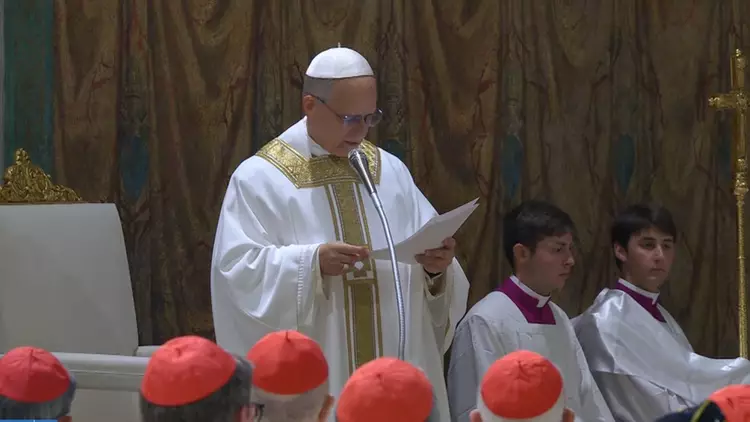
Pope Leo XIV, the first American-born pontiff, delivered his inaugural Sunday blessing in St. Peter’s Square, captivating a diverse global audience with his message of peace and unity. Born Robert Francis Prevost in Chicago, Pope Leo’s election marks a significant milestone in the Catholic Church’s history.
In his first public appearance, Pope Leo addressed tens of thousands of faithful gathered in Vatican City, including U.S. students, Peruvian nuns, and migrant families. His calm demeanor and heartfelt appeals for global peace, particularly in conflict zones like Ukraine and Gaza, drew comparisons to his predecessors, Pope Francis and St. John Paul II.
Celebrating Mass in the Sistine Chapel, Pope Leo began his homily in English before transitioning to Italian, emphasizing the Church’s role as a “beacon that illuminates the dark nights of this world.” He highlighted the importance of faith in an increasingly secular society and called for the Church to be judged by the holiness of its members rather than its grandeur.
American Catholics expressed pride and optimism following Pope Leo’s election. At St. Patrick’s Cathedral in New York City, parishioners celebrated the historic appointment, noting Pope Leo’s connections to Villanova University and his decades of missionary work in Peru as positive signs for addressing Latino and immigrant issues.
Pope Leo’s early actions suggest a commitment to continuity and reform within the Church. He has emphasized greater collaboration among cardinals and addressed modern challenges such as technological upheaval and social justice, signaling a shift toward more collective governance.
As the world watches, Pope Leo XIV’s papacy begins with a message of hope, humility, and a call for unity, resonating with Catholics and non-Catholics alike.