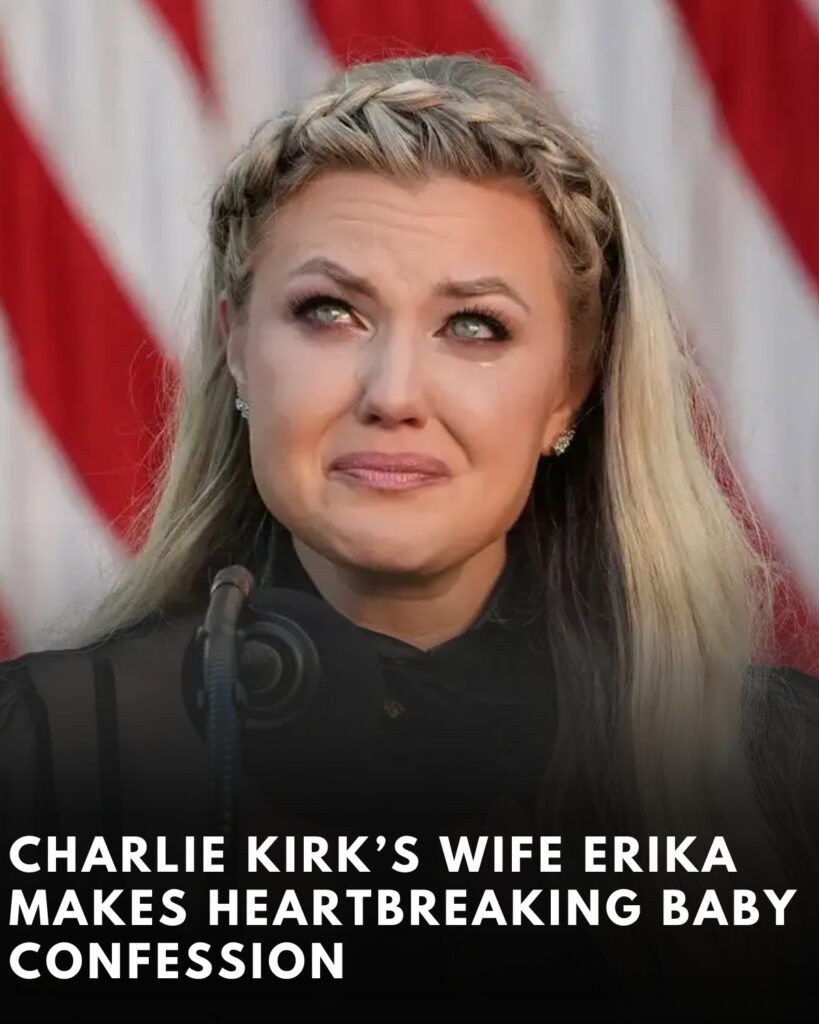
Erika Kirk has revealed that in the hours after her husband Charlie Kirk was killed she found herself praying she might be pregnant with their third child, describing the thought as a moment of hope amid profound shock. The widow of the conservative activist spoke publicly about the experience during an interview in which she reflected on the immediate aftermath of the shooting that claimed her husband’s life.
Kirk said that she and her husband had planned to have four children together, and that in the chaos of the hours following his death she prayed she might already be expecting. She called the idea “the ultimate blessing” during what she described as an overwhelming and surreal period of grief. She clarified that she was not pregnant but explained that the instinctive hope came from a longing to hold onto a piece of the future they had imagined.
The couple shared two children: a daughter, now three, and a son born in 2024. Kirk said her loss has changed the way she views time, family and long-term plans. She urged young couples not to postpone starting families if they want children, saying that life’s uncertainties have reshaped her own outlook on parenthood and the fragility of plans.
Her remarks prompted a wave of speculation online, with some social media users interpreting the comments as a pregnancy announcement. Kirk later emphasised that she was not expecting and that her comments reflected an emotional response rather than a factual statement. She explained that the prayer was rooted in grief and an instinctive desire to cling to the future she and her husband had outlined together.
Charlie Kirk was killed in a shooting at Utah Valley University in September, an attack that drew widespread condemnation across the political spectrum. In the months since, Erika Kirk has taken over leadership of the organisation her husband co-founded, Turning Point USA, pledging to continue his work while raising their children. She has appeared at several public events and spoken about the difficulty of balancing personal mourning with her new responsibilities.
The interview in which she disclosed her private thoughts has drawn sympathy from many who praised her candour. Supporters said her honesty about the emotional turbulence of sudden loss resonated with people who have experienced bereavement, particularly young widows with children. Others questioned whether such intimate reflections should be shared publicly so soon after the tragedy, though her supporters argued that the transparency helped put a human face on the consequences of political violence.
Kirk said she is focusing on caring for her two children and continuing the work her husband left behind, describing her approach as an effort to translate pain into purpose. She said that while the future feels uncertain, she hopes to honour her husband’s memory both through her family and through her leadership of the organisation.
The comments have added a deeply personal dimension to the public mourning that followed the shooting. For many supporters of the couple, the disclosure illuminated a moment of fragile hope in the middle of devastating news. Kirk said she continues to rely on faith and community as she adjusts to life without her husband, and that her priority remains protecting and guiding the two young children the couple had together.
She added that while the idea of being pregnant brought a fleeting sense of comfort in the moment, the reality of raising her children alone has strengthened her commitment to giving them stability and continuity. She said her husband’s death has reshaped every part of her life, but that she intends to carry forward the values he championed while building a new life for herself and her family.