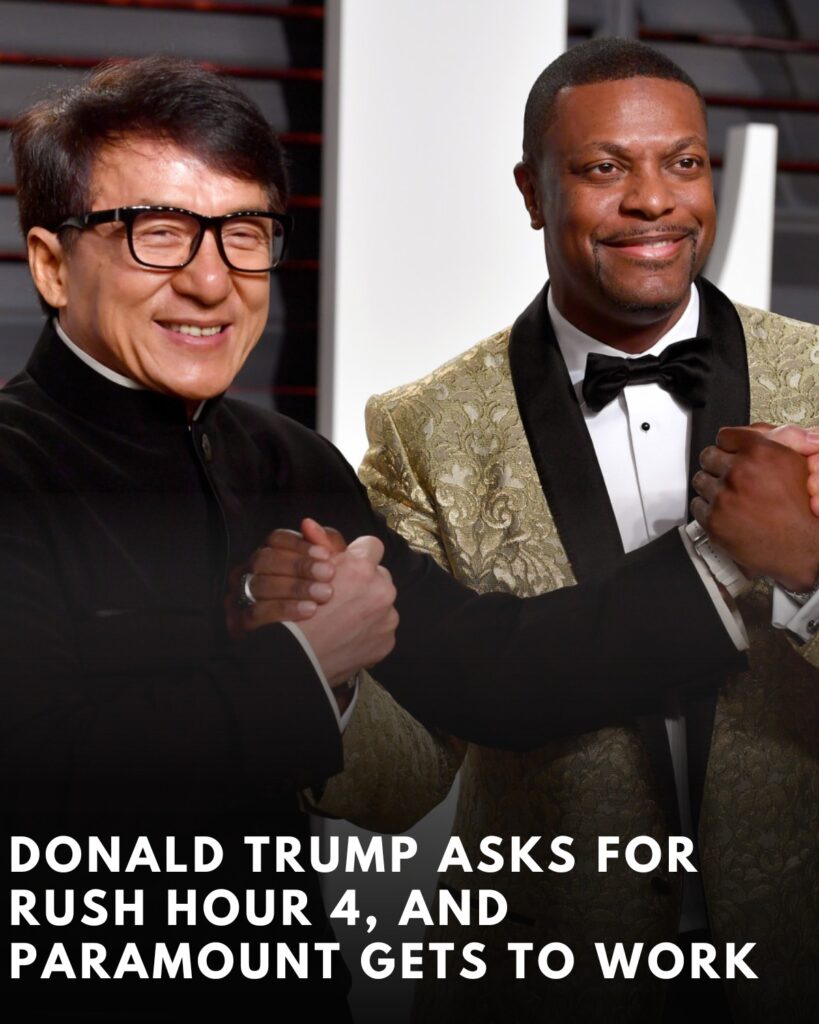
Former President Donald Trump is reported to have played a decisive role in the revival of the “Rush Hour” movie franchise, with studio executives green-lighting a fourth film, “Rush Hour 4”, after his intervention. The planned sequel will reunite the original stars alongside the return of director Brett Ratner, whose involvement has stirred fresh debate given his controversial past.
According to people familiar with the negotiations, Trump lobbied a top studio investor to back the project, arguing that the comedy-action films featuring martial-arts sequences, cross-cultural humour and the dynamic between the lead actors embodied a spirit he believes modern audiences are missing. The studio, which acquired rights to distribute the film through a new corporate structure, reportedly agreed as part of a broader reshuffling of assets and influence in Hollywood.
The original “Rush Hour” trilogy, starring the Hong Kong martial-arts icon and the American comedian, launched the careers of its leads and enjoyed global box-office success. But attempts to produce a fourth instalment repeatedly stalled over the years, primarily because of concerns over commercial viability and questions around which director would helm the film. That changed when the new studio leadership, under pressure from key stakeholders, reopened the project.
Rather than selecting a fresh filmmaker to distance the film from past controversies, the studio opted to bring back the original director. His return has prompted immediate backlash among critics, industry insiders, and audiences who remember the serious misconduct allegations that derailed his career during the “MeToo” era. Those allegations had led major studios to cut business ties with him, leaving the project in limbo for nearly a decade.
For his part, the director had spent recent months working on a documentary about the former first lady, signalling a tentative return to the mainstream film industry. With the new “Rush Hour” deal, he is now positioned to direct the first major narrative feature of his career in more than ten years — a comeback that some interpret as part of a broader shift in cultural currents within the entertainment industry.
Proponents of the reboot argue that nostalgia and the proven appeal of the “buddy-cop comedy” formula still hold considerable value, especially among international audiences drawn to action-comedies with global box-office potential. Supporters of the decision point to the original films’ performance and claim the new political and cultural climate could welcome a successful return.
Still, critics warn that the revival may carry reputational risk. The director’s past allegations remain unresolved in the eyes of many, and some argue that resurrecting the franchise could undercut efforts to hold powerful industry figures accountable. Others fear the reboot’s themes, originally premised on broad comedy and cultural stereotypes, may feel outdated or insensitive in today’s sociopolitical environment.
As of now, the project is in early development. The studio has reportedly secured a distribution deal, financing arrangements are being finalised, and the original stars are said to be in talks to return. No official release date has been announced, and casting beyond the leads remains unconfirmed.
Whether “Rush Hour 4” will succeed, commercially or artistically, remains uncertain. What is clear is that the film’s revival reflects a convergence of political influence, changing studio ownership, and a renewed appetite for nostalgia in mainstream cinema. For many, the decision will test whether past controversies can be overlooked in pursuit of box-office success, or whether audiences and industry insiders will push back against a comeback grounded in contested history.