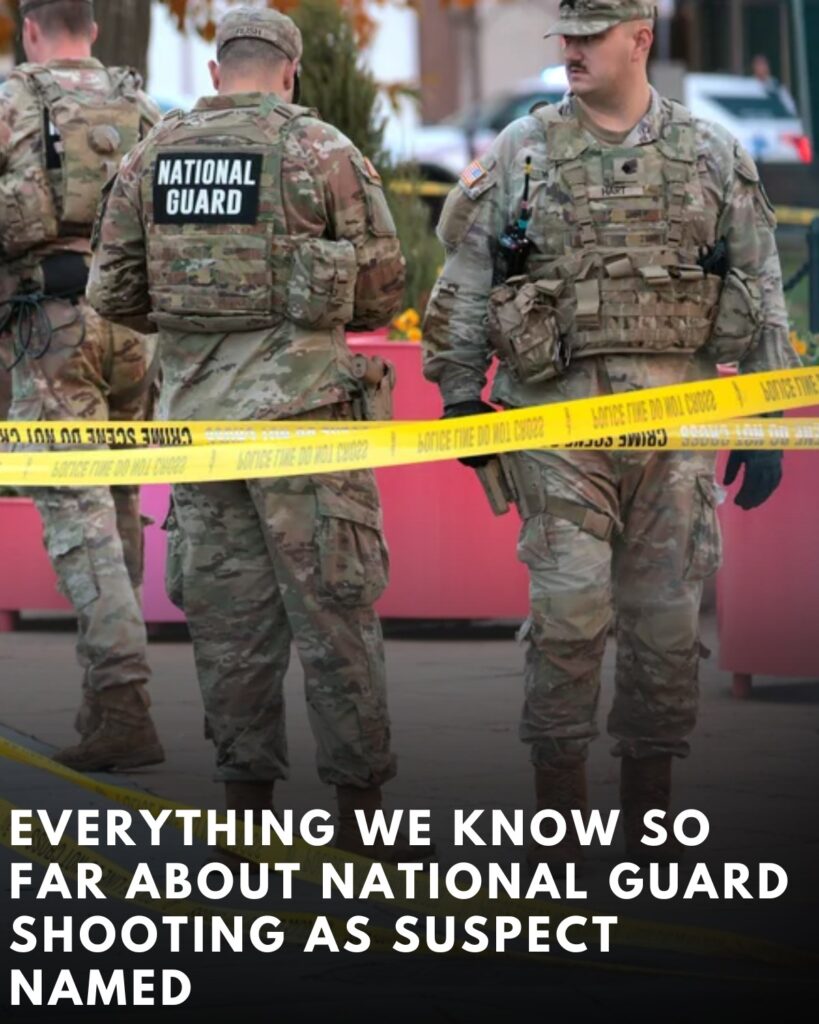
Two members of the West Virginia National Guard were critically wounded on Wednesday afternoon in a brazen shooting just blocks from the White House in Washington, D.C. The attack has triggered a sweeping security lockdown in downtown Washington and a fast-moving federal investigation.
The shooting unfolded at about 2:15 p.m. Eastern Time near 17th Street and I Street Northwest, close to the Farragut West Metro station, an area only a few minutes’ walk from the White House perimeter. The two guardsmen had been on a high-visibility patrol, part of a broader deployment of National Guard forces operating in the district since earlier this year. According to law enforcement, a male suspect suddenly turned a firearm on the patrol and opened fire at close range. A by-standing guardsman returned fire. Other soldiers and local police quickly moved in, subdued the attacker, and took him into custody while first responders rushed to tend to the wounded.
Immediately following the shooting, there was confusion over the condition of the injured. Initial statements from regional officials mistakenly reported that both guardsmen had died. Hours later, authorities clarified that although both are seriously wounded, they remain alive and are hospitalised in critical condition. The suspect, who was also wounded during the gunfire exchange, remains under medical care; his injuries are believed to be non-life-threatening. No names of the victims have been released, and investigators have said that the suspect is not cooperating.
The suspect has been identified by federal officials as a 29-year-old Afghan national who entered the United States in 2021 under a large-scale evacuation programme for Afghans who fled Kabul, and was granted asylum earlier this year. According to officials briefed on the case, he had no previously known criminal record. The circumstances of his asylum approval and resettlement have now come under renewed scrutiny.
Authorities have characterised the shooting as an ambush-style attack, emphasising that all available evidence — including surveillance footage, body-camera video and eyewitness statements — points to a single individual acting alone. The city’s mayor described the incident as a “targeted shooting,” and law enforcement sources said they are treating it as a potential act of terrorism, though they emphasise that the investigation is ongoing and no official motive has yet been confirmed.
In the immediate aftermath, a broad area around the White House and downtown government buildings was placed under heightened security. Streets were blocked, police and federal agents flooded the area, and access to federal facilities was restricted. The White House itself went briefly into lockdown before authorities deemed there was no continuing threat.
Late that evening, the President issued a public condemnation of the attack, describing it as “an act of evil, an act of hatred and an act of terror.” He called for a comprehensive re-examination of the immigration status of Afghan nationals admitted under the previous administration, declaring that lax migration policies represented a grave threat to national security. Shortly after, the U.S. Citizenship and Immigration Services suspended all pending immigration requests from Afghan nationals indefinitely, pending what the administration described as a full review of vetting procedures.
The President also ordered an additional 500 National Guard troops deployed to Washington, increasing the already substantial federal troop presence. The extra forces join over two thousand Guard members already stationed in the capital under an executive order issued earlier this year in response to what officials describe as a crime emergency. That deployment has drawn legal challenges on grounds of federal overreach, but has remained in place pending appeal.
The attack has reignited a sharp debate over the presence of armed federal forces in civilian areas, particularly in the nation’s capital. Supporters of the deployment argue that the added security is necessary given rising threats and violent incidents, while critics maintain that heavily armed patrols have fuelled tension and increased the risk of clashes. The fact that the shooting targeted uniformed troops — rather than civilians — underscores the precariousness of maintaining such a militarised posture in public spaces.
Investigators from the Federal Bureau of Investigation, the Metropolitan Police Department and other agencies are conducting a joint inquiry. They say their priority is to establish a clear motive, finalise ballistic and forensic examinations, interview any witnesses, and review all available video evidence. So far, they say the evidence points to a lone actor, but they have not ruled out the possibility of outside influence or accomplices.
In the days ahead, authorities expect to press formal criminal charges against the suspect. Potential charges include attempted murder, assault on federal personnel, firearms offences, and possibly terrorism-related charges — depending on what motive emerges. Meanwhile, security around key government locations in Washington remains elevated, with some streets and facilities operating under restricted access, as agencies conduct a sweeping review of threat assessments ahead of the holiday period and upcoming political events in the capital.
For now, the city remains on edge. The shooting has left residents shaken, especially those who work or travel daily near the White House. The sudden eruption of violence so close to the government’s nerve centre has rattled confidence in security protocols.
Most immediately, attention is focused on the recovery of the two wounded guardsmen and completion of the investigation. Their identities remain confidential and their families have been notified. The suspect’s condition is stable and he remains in custody under guard. Authorities have urged any witnesses who may have seen the shooting or captured video to come forward.
This rare and serious attack on National Guard troops in the capital marks one of the most significant security incidents in Washington in recent years. As the investigation continues and the government reassesses immigration, law enforcement and security policies in response, the ramifications of the shooting are likely to be felt nationwide for some time.