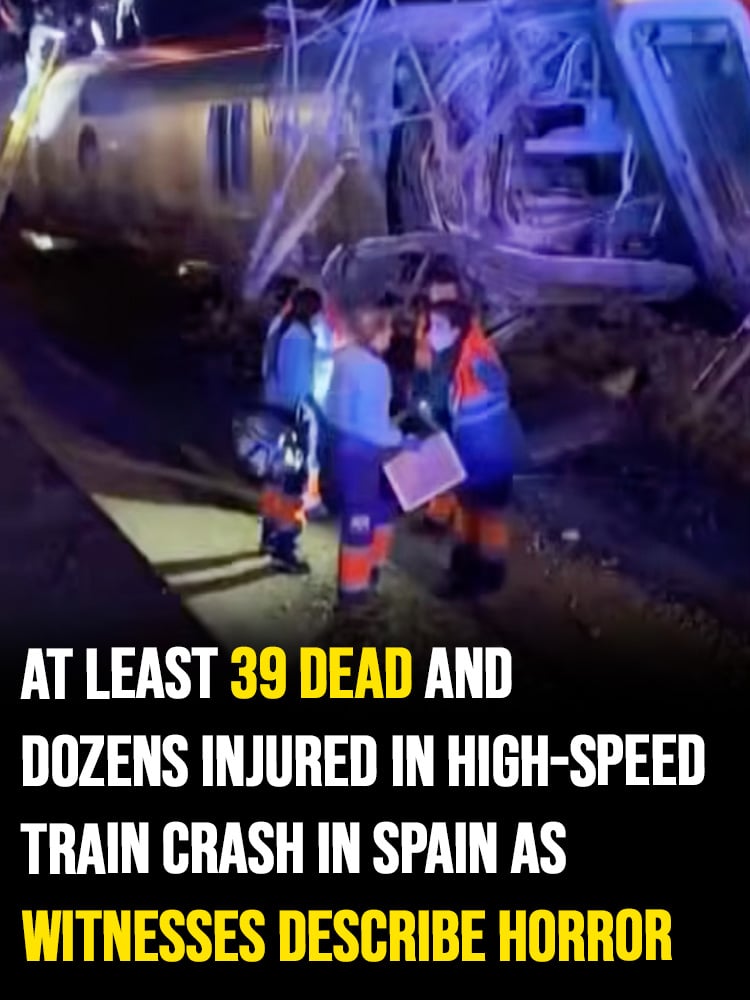
The screams began in the dark. Metal shrieked, glass exploded, and a high‑speed train suddenly became a battlefield of twisted steel and trapped souls. In seconds, a quiet Sunday journey turned into Spain’s deadliest rail disaster in over a decade. Survivors speak of chaos, children crying, rescuers tearing through wreckage, as families desper…
They boarded expecting an ordinary journey between Malaga and Madrid, not a catastrophe that would rip carriages from the tracks and hurl them into a ditch. In Adamuz, Córdoba, two trains met in the worst possible way: one derailed, crossed onto the opposite line, and collided head‑on with another, leaving at least 39 dead and more than a hundred injured. Survivors describe a roar like thunder, lights going out, and the sickening realization that the carriage floors were no longer level.
Rescue teams fought through the night, crawling into crushed compartments, cutting through metal, lifting bodies to reach faint voices beneath. Firefighters spoke of narrow spaces and impossible choices, removing the dead to find the living. As Spain’s prime minister called it a “night of deep pain,” families waited outside hospitals, clinging to phones, praying every unknown number might mean their loved one was still alive.