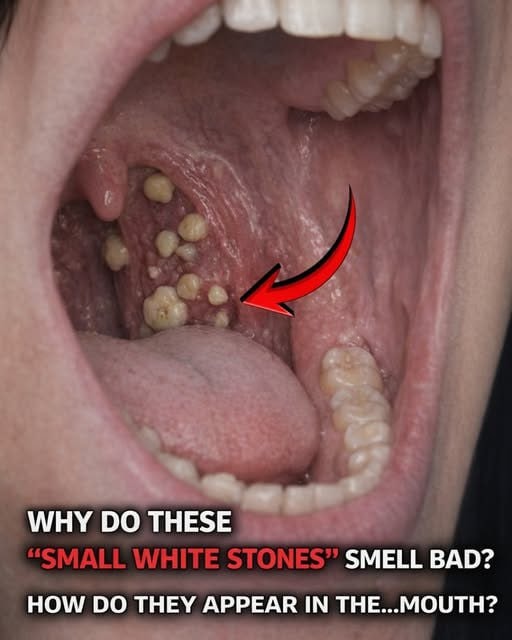
Bad breath is often blamed on poor oral hygiene, but for some people, brushing and flossing are not enough. When unpleasant breath persists despite good dental care, the cause may lie deeper in the throat. One commonly overlooked source is tonsil stones, medically known as tonsilloliths.
Tonsil stones are small, hardened deposits that form in the natural folds, or crypts, of the tonsils. These crypts can trap food particles, dead cells, mucus, and bacteria. Over time, minerals in saliva cause this material to harden into stones. Many people have tonsil stones without realizing it.
The odor linked to tonsil stones comes from bacteria that produce sulfur compounds, which are responsible for halitosis. Because the stones sit deep in the throat, mouthwash often cannot reach the source.
Symptoms may include persistent bad breath, a bad taste, throat irritation, or white spots on the tonsils. They are usually harmless but can be uncomfortable.
Gentle care, hydration, saltwater gargles, and managing post-nasal drip can help. Persistent or painful cases should be evaluated by a healthcare professional.