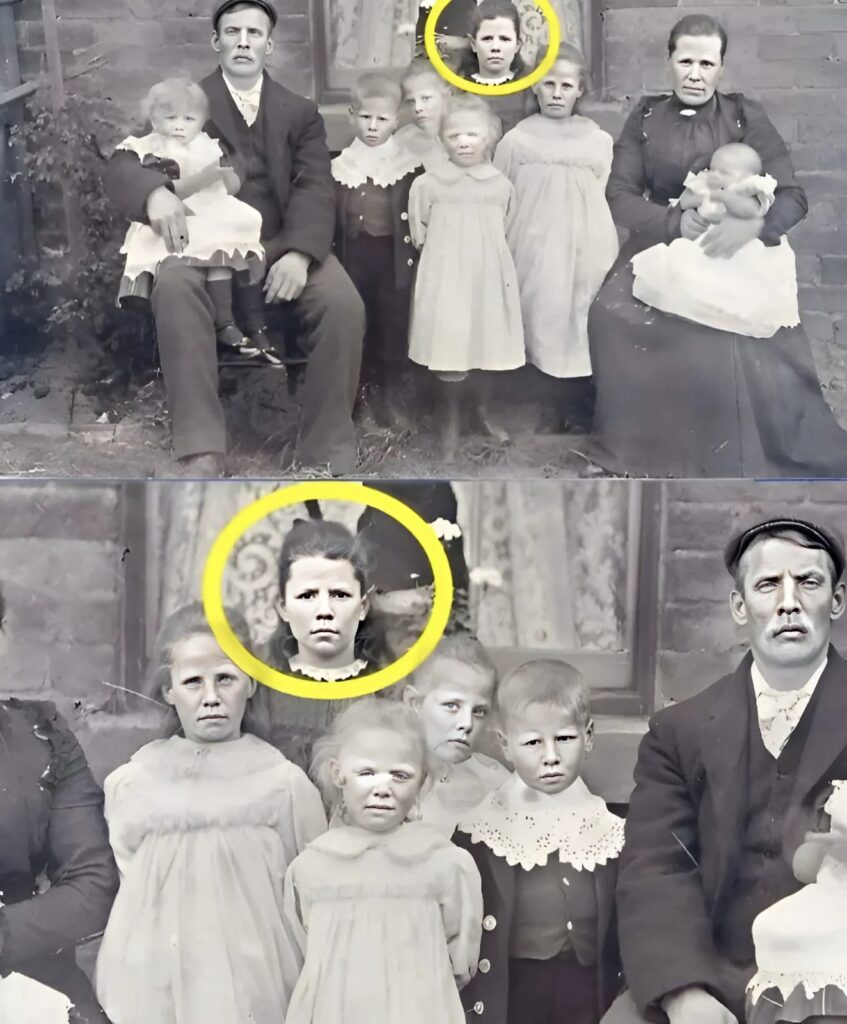
They would later say Maria’s smile looked almost kind, if you didn’t stare too long. On the enhanced image, her eyes were sharp, focused not on the camera but slightly to the left, as if watching someone else in the room. In the corner, where grain and shadow should have been, the software teased out the faint outline of another hand resting on her shoulder—long-fingered, wrong-jointed, blurred as if moving too fast for the exposure. No one in town remembered a second figure. No one admitted they’d ever heard her name spoken aloud before that night in the archive.
Yet, after the photograph surfaced, the town’s stories shifted. Elderly residents suddenly recalled “that girl” who vanished when the foundations of the old house were poured. Property records, once missing, appeared with dates that contradicted every known timeline. The sealed room beneath the house, once dismissed as rumor, was found exactly where the photograph seemed to point: twelve degrees left of Maria’s gaze, three meters down. They broke through concrete that should not have been hollow and found toys arranged in a circle, their wooden faces worn smooth, their painted eyes turned toward a patch of bare earth. In the center lay a second photograph, undeveloped, its surface cold to the touch. When they lifted it, every light in town went out for seven full seconds. Long enough, several swore, to feel someone step quietly into the dark beside them and smile.